

The center for humane technology, formerly time-well-spent foundation publishes podcasts to think differently around technology and attention.
With a variety of guests from the tech-industry as well as researchers.
Great little videos from Oblong‘s founder John Underkoffler.
T-Mobile’s Sidekick gets a remake! Inspired by the past but stepping boldly into the future, it has revolutionary AI, headphones that double as chargers, personalized GPS guidance by John Legere, and more!
Nice one for today!!!
Student Interaction Design Research (SIDeR) conference – sider18.aalto.fi
SIDeR is an international forum for showcasing papers, demos and posters from different disciplines related to interaction design. The conference will be held May 18-19, 2018 at Aalto University in Helsinki.
The theme of this year’s SIDeR conference is Flux. Flux describes a state of constant movement, transformation, and change. The boundaries between disciplines such as technology, engineering, biology, arts, and design are shifting and dissolving. As practitioners and researchers, we have to embrace this uncertainty and nourish the arising uncharted potentials.
As interactions permeate all facets of our lives, the agencies of the human and machine are increasingly intertwined, resulting in novel design concepts and artefacts. SIDeR 2018 provides a meeting ground for graduate students to exchange and disseminate ideas concerning the aforementioned continuous transformations in a multidisciplinary platform.
TOPICS:
Suggested topics for papers include but are not limited to:
– Participatory Design
– Design Process
– Human-Computer Interaction
– Ubiquitous Computing
– Multimodal Interaction
– Tangible User Interfaces
– Aesthetics of Interaction
– Experimental Design
– Design Methods
– Interaction Techniques
– Information Visualisation
– Design Cases
– Mobile Computing
– Data Physicalization
– Artificial Intelligence
– Game Design
IMPORTANT DATES:
Submission of papers, poster and demos: March 21, 2018
Notice of acceptance: April 18, 2018
Conference: May 18-19, 2018
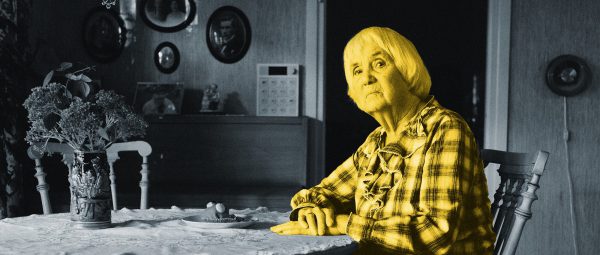
Future Domestic Landscape
What will the future look like in 20 years?
– all too often we see squeaky clean visions of the future where IoT and ubiquitous computing deliver us spacious white rooms, glassy surfaces; toothbrushes that tell our fridge what to get delivered by automated vehicles zooming through deserted streets –
Students in the MFA in Interaction Design at Umeå Institute of design explored alternate and concurrent visions of the future through design fictions that question what futures we want to bring about.
The results of the course Interaction Concept in the MFA in Interaction Design at UID, as it was conducted in 2015, 2016 and 2017, are all brought together in one place. This creates a Future Domestic Landscape, highlighting surprising parallels and frictions between ideas and concerns about current trends and future possibilities, but also interesting surprises such as returning actors, locations or sounds.
We invite you to contribute opinions, observations or your on design fictions to this publication.
What do you see? What do you say?
https://teenage.engineering/designs/R
R is the worlds first emotional 6-axis life form. with unique possibilities to express emotions and react to a conversation driven by baidu’s leading artificial intelligence technology. with six fully independent axes, loaded with sensors and microphones, and with the same loudspeaker design as the H built into the base, the industry grade motor control will make it dance and express feelings in a way you have never experienced before. and maybe, just maybe it will be compatible with OP-Z.
Behind the scene video:
Notes from the UK / India based design studio about why it is important to critically address the future of technology:
https://www.ted.com/talks/anab_jain_why_we_need_to_imagine_different_futures
Much of how we interact with computers -and other people using them- nowadays was demo’d nearly 60 years ago.
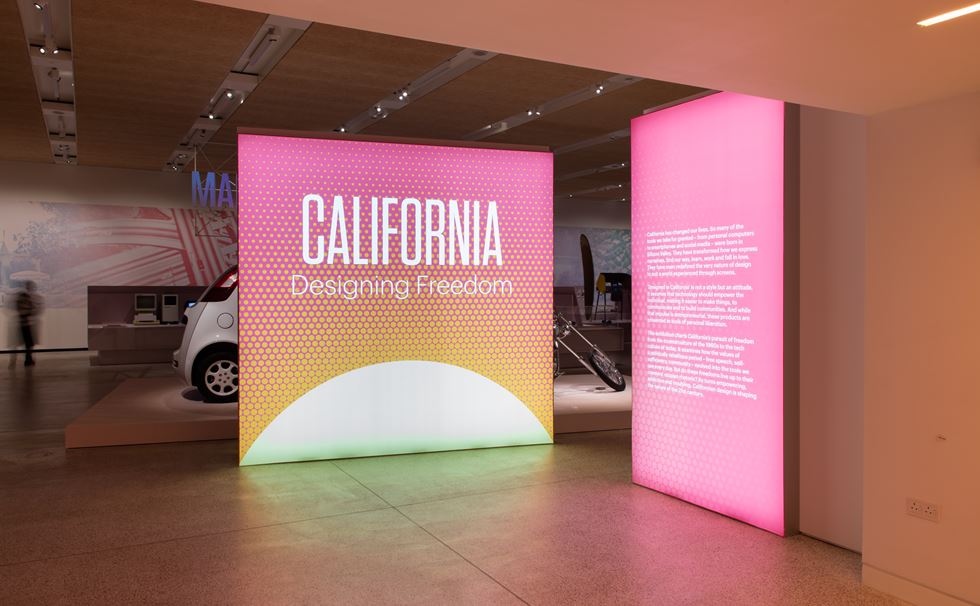
An exhibition at the London Design Museum showcases many of the artifacts that set and mark the agenda of the Californian (techno-)utopism that shapes so much of our lives today. California: Designing Freedom, May 24 – October 15, 2017.
The Guardian gives a brief impression of the exhibition.
And a related article in the same newspaper addresses a particular aspect of the cultural context of these developments: “Designers on acid: the tripping Californians who paved the way to our touchscreen world”.
I found it quite enlightening to hear some of the protagonists of this story reflect over dinner.
Memorable quote: “It’s just packaging man”.
If you want to read more about this story: Fred Turner’s book “From counterculture to cyberculture” is an entertaining read.
Barry M. Katz gives a perspective on the role that design played in his book “Make it New”.
If (tendentious) visual story telling is more your thing, watch Adam Curtis’ 3- episode documentary (?) “All watched over by machines of loving grace”.
“Sonic Pendulum a sound installation using artificial intelligence that processes sounds from around the space to create an endless sound space”. Be sure to check his other really nice projects: http://yurisuzuki.com/design-studio/
[via]
Our Adobe Research team is exploring what an intelligent digital assistant photo editing might look like. To envision this, we combined the emerging science of voice interaction with a deep understanding of both creative workflows and the creative aspirations of our customers. Our speech recognition system is able to directly accept natural user voice instructions for image editing either locally through on-device computing or through a cloud-based Natural Language understanding service. This is a first step towards a robust multimodal voice-based interface which allows our creative customers to search and edit images in an easy and engaging way using Adobe mobile applications.
More Adobe Research HCI projects here

From the folks at RoMeLa – The Robotics & Mechanisms Laboratory at UCLA (http://www.romela.org). It seems like they brought a cartoon stick figure to life. It’s so nice! Here’s part of the research abstract:
Robots are often associated with being heavy, mechanized metal objects. In fact, most current bipedal robots are unsafe, unstable, complex, expensive, and slow. The risks, inefficiencies, and danger involved prevents their widespread use and interaction with humans. This video presents the initial feasibility study and testing done on BALLU (Buoyancy Assisted Lightweight Legged Unit). BALLU is a robotic system that uses buoyancy to aid its stability and increase safety. This unique approach makes it intrinsically stable at all times and prevents it from falling.


